
The Punjab Assembly has passed the Punjab Prisons and Correctional Services Bill, 2026, to modernise the prison system, and the Societies Registration (Punjab Amendment) Bill 2026, to enhance transparency and accountability of societies.

Chinese leaders, including its generals, will have to weigh whether they can win a war if they ever attack Taiwan and if at all, can they sustain the subsequent devastation, notes Rup Narayan Das.

The Jammu and Kashmir government has terminated the services of two employees for their alleged links with terror outfits, including Lashkar-e-Taiba and Hizbul Mujahideen.
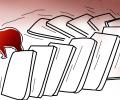
Markets face risk of a prolonged bear phase as oil shocks and geopolitical tensions test inflation, growth and investor confidence globally, points out Debashis Basu.

Haryana Chief Minister Nayab Singh Saini has directed the development of a digital portal to track apprenticeship and placement data for Industrial Training Institute (ITI) graduates, alongside initiatives to boost youth employment opportunities.

A combination of security pressure and rehabilitation efforts has significantly weakened Naxalism in India, leading to numerous surrenders and the elimination of key leaders.

Kerala, Tamil Nadu and West Bengal have been fiscally stressed for a considerable period of time, and there are no easy ways to mobilise revenues to meet the cost of the promised freebies, particularly in the prevailing difficult economic scenario, points out M Govinda Rao.
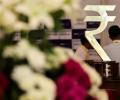
The Indian rupee saw a significant appreciation against the US dollar following President Trump's suspension of military strikes against Iran and the Reserve Bank of India's decision to maintain its key interest rate. Market sentiment was further buoyed by positive comments from the RBI regarding the health of the banking sector.
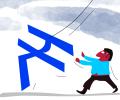
The Indian rupee depreciated by 28 paise to settle at 93.44 against the US dollar, influenced by ongoing uncertainties surrounding West Asia peace negotiations, volatile crude oil prices, and the Reserve Bank of India's recent adjustments to non-deliverable forward market regulations.
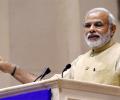
Prime Minister Narendra Modi expressed confidence that the BJP would form the next government in West Bengal after the assembly polls, asserting that he would return to the state for the oath-taking ceremony after results are announced on May 4.

'I cannot imagine that any NSA before Ajit Doval would have given us this kind of time and this kind of engagement. They would have offered slogans, or nothing at all. That, too, tells you something.'

Phunchuk Stobdan's forte was candour and strong views on India's defence. Naturally, India's adversaries were in awe of him, fearing his views and unyielding stand on boundary issues, remembers Tarun Vijay.

The BJP has released its election manifesto for West Bengal, promising a hardline stance on infiltration, financial assistance for women and unemployed youth, and the implementation of the Seventh Pay Commission for state employees.

The United States' historical strategic alignment with Pakistan, dating back to the Cold War, has consistently aimed to create a political and military parity with India, despite India's significantly larger size and resources. This long-standing relationship continues to influence regional dynamics, particularly in West Asia and the Indo-Pacific.

Sri Lanka's response to the Easter attacks has been slow and politically contested, unlike India's swift institutional reforms after the 2008 Mumbai terror attacks, observes Colonel R Hariharan (retd).

Kerala's voters are sophisticated, educated, and unforgiving. They have once again made it clear that no government is entitled to remain in power. The Congress would do well to remember this, points out Ramesh Menon.

The Indian government has launched the Urban Challenge Fund (UCF) with a total outlay of Rs 1 lakh crore, aiming to leverage private and market finance for urban infrastructure projects by providing state support in capacity building and credit guarantees.

A BJP government in Bengal inherits more problems than it might care to admit at its moment of triumph, points out Ramesh Menon

As the March 31 deadline arrives, a wave of Maoist surrenders suggests insurgency's end, but political and social concerns remain.

In a world fractured by uncertainty, India stands out for its policy consistency, paired with sustained ambition, points out Pritam Banerjee.

In a region increasingly shaped by competition and coercion, such collaboration strengthens security without confrontation, builds capacity without dependency and promotes order without domination, points out Dr Kumar.

As Iran heads into crucial peace talks with the United States of America, here are the six men who decide the Islamic Republic's course.

India's handling of the Iran crisis reflects a growing strain between strategic autonomy and geopolitical alignment, observes Ambassador M K Bhadrakumar.
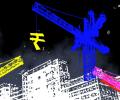
Through policy interventions, Indian cities need to be reimagined as a network of inter-connected assets and services which serve to strengthen the social contract between citizens and their cities by improving their quality of life, the Economic Survey has flagged.
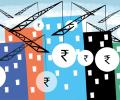
The Reserve Bank of India on Friday proposed to allow banks to lend to Real Estate Investment Trusts (REITs) with certain prudential safeguards to deepen the financing pool for the real estate sector.

'LIC will reduce but not fully exit its stake in IDBI Bank, which remains an important bancassurance partner,' says LIC of India' MD and CEO R Doraiswamy.

The Indian government informed Parliament that India and the US are engaged in negotiations for a mutually beneficial multi-sectoral bilateral trade agreement. The two countries also cooperate on strategic, economic, and defense matters, managing divergences through high-level dialogues.

'The BJP is keeping its options open and that the final decision is still tightly held.' 'That is consistent with the party's tendency to preserve suspense, avoid premature factional conflict, and use leadership selection as a way of resetting internal hierarchies.'

'The Maoist leadership spread fear that surrender meant torture or death. Once that false narrative collapsed and our operations proved transparent and credible, the surrender momentum became irreversible.' 'From 42,000 square kilometres, Maoist activity is now confined to barely 500-600 square kilometres -- less than two per cent of Bastar. This is their last remaining base area.'

'India's ties with Israel have to do with defence and general technology.' 'The war changes nothing in what India and Israel hope to get from the relationship.' 'It's not as though India will get significantly more benefits from Iran if India abandons Israel at this time.'
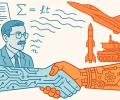
'Government officials use Gmail and ordinary phones without basic security consciousness.' 'Interoperability, especially in joint exercises with countries like the US, worries me.' 'It often means we open our systems to them, but they don't reciprocate.' 'They could have kill switches in their systems and might even be able to affect ours.'

Bangladesh's newly-elected Prime Minister Tarique Rahman pledged to strengthen the rule of law and ensure the country is a safe land for people of all faiths, while also addressing corruption and improving law and order.

Israel and the United States had a plan. Iran punched back. And now the Gulf is reeling, the world is beginning to feel the pain and, as on date, no one in Washington or Tel Aviv appears willing to admit that the punch has landed, notes Prem Panicker, continuing his must-read blog on the war in the Middle East.

Benchmark stock indices Sensex and Nifty dived sharply by nearly 2 per cent on Sunday after Finance Minister Nirmala Sitharaman proposed a hike in the Securities Transaction Tax (STT) on derivatives. Reversing the early gains, the 30-share BSE Sensex plunged sharply by 2,370.36 points or 2.88 per cent to slide below the 80,000-mark at 79,899.42 in afternoon trade as the finance minister announced a hike in STT on futures contracts to 0.05 per cent from the current 0.02 per cent.

Iran has formally appealed to the United Nations Security Council and the UN Secretary-General, accusing the United States of inciting violence, interfering in Iran's internal affairs, and threatening military action, according to an official letter circulated by Iran's Permanent Mission to the UN.

The 'rescue' operation occurred within kilometres of Iran's underground tunnel complex at Isfahan, assessed by the IAEA and US intelligence as holding a substantial portion of the country's 60 per cent enriched uranium stockpile. Retired senior US military officers have highlighted that the mission's footprint -- hundreds of special operators, multiple heavy-lift aircraft deep inside Iran -- appears outsized for recovering a single airman. Prem Panicker continues his must read blog on the Iran War.

Sustaining 8 per cent-plus growth rates is necessary if we are to reach high-income status by 2047, points out Amitabh Kant.
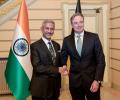
The era where nations thrived through rigid alignments is giving way to an age where the connective State defines power. For India, that era has arrived, points out Dr Nishakant Ojha.

In the Indo-Pacific's new era -- where perception shapes reality faster than treaties -- the real entrapment is not of China or the United States. It is the test Japan has set for itself -- and whether partners like India, acting as balancers rather than accelerants, can help ensure that the story ends in stability, points out Varun Arya.

China and Pakistan concluded their strategic dialogue, reiterating their opposition to unilateral actions in South Asia and discussing Kashmir, Afghanistan, and trilateral cooperation.
